
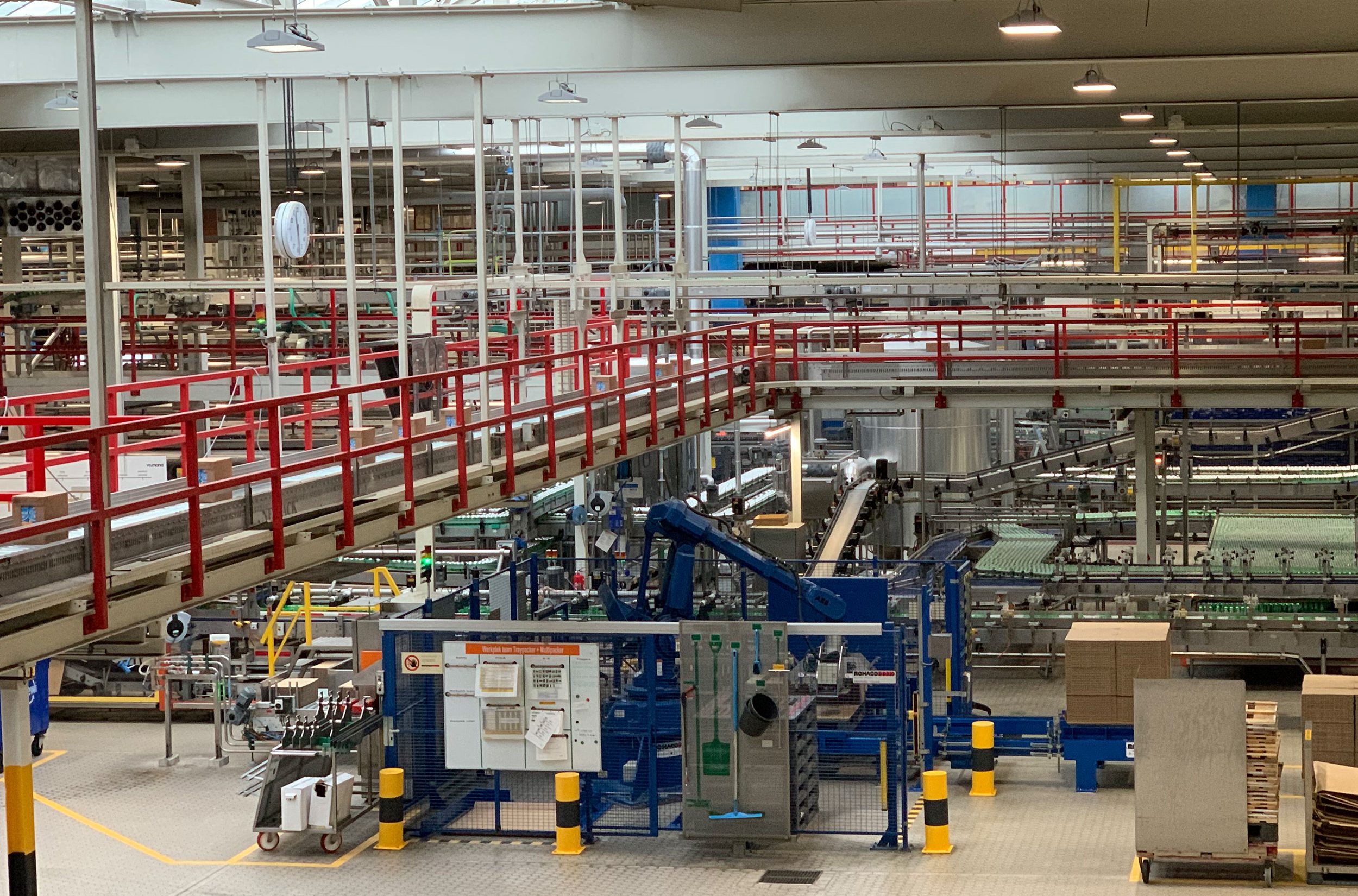
Inexperienced in the new challenge that lay ahead of me, I was given the opportunity to draw up a plan to become CO2 neutral by 2030. And that was for Vrumona, the number one supplier of healthier soft drinks with a production environment employing approximately 400 FTEs. From the outset, I was honest with my client: they would be my first pilot project, but they were fine with that. They knew me and, because there were no expectations, every step forward would be an improvement.
OK! So where would I start? First, I defined what I would deliver. The most important thing was the Renewable Roadmap: defining how the site would stop using fossil fuels in production. I didn’t have a deadline, but I wanted to have it ready in March. I wanted to use the rest of the year for implementation, not just planning.
Next, I focused on the scope: the main sources of CO2 emissions were thermal and electrical energy. From 2021, electricity would be supplied by a wind turbine, which meant that 30% of the target had already been achieved. The biggest challenge was to convert thermal energy from gas to another, non-fossil energy source. But how? Most examples in the literature are about wind and solar energy. And hardly any about replacing thermal energy.
That was the moment to call for help. I turned to my Urgenda network and asked for an expert in the field of renewable thermal energy. They gave me a name, and after I called him, he accepted the challenge to help me.
The next problem was the lack of data to analyze. Steam meters had only recently been put into use—steam is produced using thermal energy. We assembled a team of internal specialists to make the best possible assumptions and come up with the best possible plan. But everyone was already busy. They had their own work to do, and this was on top of that.
Renewable Roadmap Week
I outlined my plan: Reduce, Replace, and Compensate*. And I explained it to every stakeholder. Then I made a plan for the process of coming up with a plan. That became the “Renewable Roadmap Week,” making a plan in one week. It meant that people had to invest a lot of time, most of them had to put their normal work aside for a few days, and some even for the whole week. And that with already full schedules. I think that the time I took to explain the plan and the reasons behind it to all stakeholders ensured that people decided to make time for it.
Ultimately, we mapped out the current situation and drew up a plan to reduce our dependence on gas. We then considered how we would replace gas, primarily by using a central heat pump system. Because heat pumps consume a lot of electricity, it is also important to reduce electricity consumption. We do not expect to have to offset any CO2, as the goal of reducing gas consumption to zero is achievable.
Hester Duursema, Corporate Affairs & Communication Manager, Vrumona: “As Vrumona and Heineken, we have a global goal of becoming CO2 neutral in production by 2030 and throughout the entire chain by 2040. This is a huge task and requires dedicated and disciplined commitment. That is what Liliana offers. She knows how to sink her teeth into the challenge and get people on board. She knows how to translate a goal that is relatively far in the future into a concrete step-by-step plan. And to achieve concrete results within the foreseeable future. The combination of analysis, follow-up, monitoring, bringing the right people together, and motivating them to take action ensures that we are taking real steps forward.
Liliana offers what we don’t have in-house: someone who continuously pursues this topic and doesn’t let go until she has achieved her goal, i.e., making a sustainable impact.”
*We only use compensation as a last resort.